
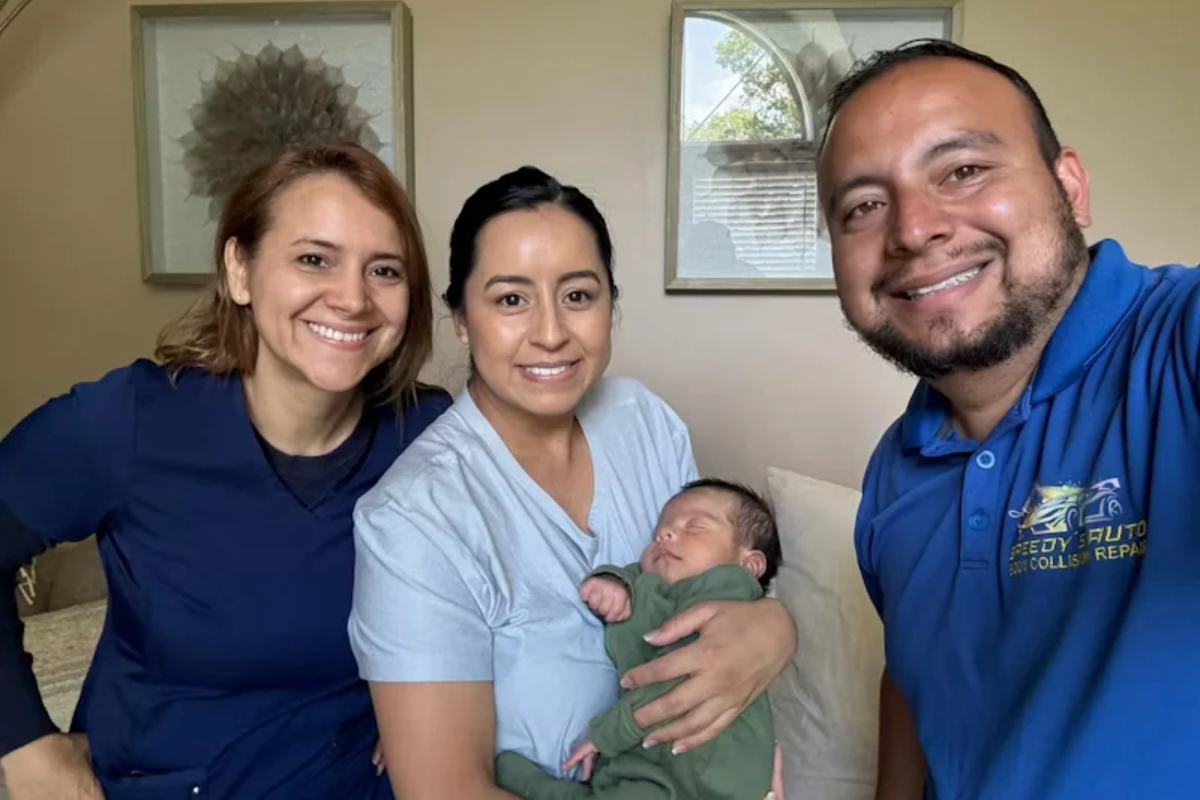
Kansas City Doula Esmeralda Hill (left)
For years, doulas in Kansas City have reported barriers in accessing the financial resources they need to provide families' support before, during and after their pregnancy.
The persistent challenge has led many doulas — trained professionals who provide continuous physical, emotional, and informational support to a person before, during, and after childbirth — to consider reducing or discontinuing their services.
According to a survey by the Community Capital Fund of 33 Kansas City-based doulas, 90 percent of respondents have considered scaling back or eliminating their services.
Addressing that need is why CCF and the Kansas City Health Department partnered on the KC Doula Program to strengthen doula businesses and provide direct services to families in Kansas City, Missouri.
The pilot program came to a close in October after awarding $135,000 to 12 doulas and $145,000 for families served by 22 doulas.

KC Doula Heidi Mills
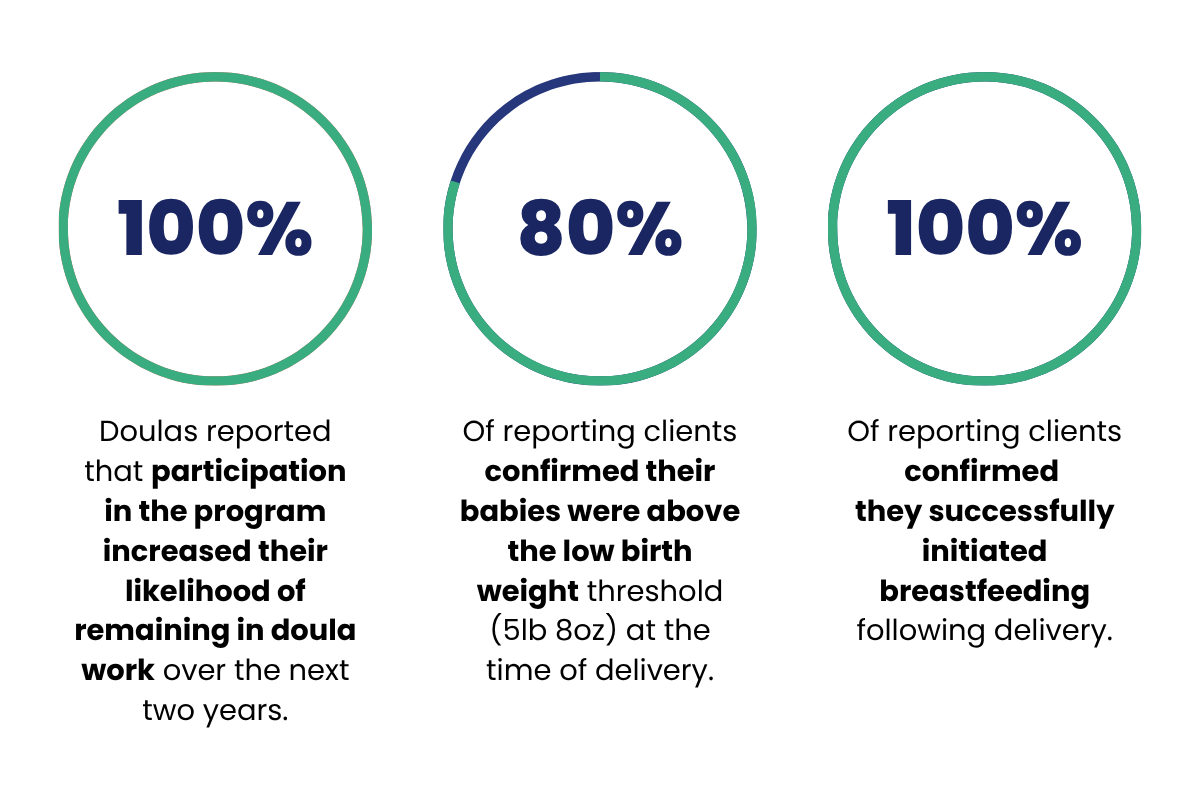
Every doula who provided feedback on the program says their participation has made them more likely to stay in the work for the next two years.
“This program gave me a lot more financial capacity to invest in my own training and expand my services to my community,” said Heidi Mills, a participating doula. “I have been so grateful for it and the way it decreased the financial burden of birth work for me this year so I could show up more joyfully for my clients.”
That shift is reaching families. Across two phases, the program has served 35 families and logged 1,728 collective hours of doula care. Among clients who completed the experience survey, 92% said they were extremely satisfied, and 80% of babies were above the low-birth-weight threshold at delivery.
The need for doulas is clear in Missouri. In the Show Me State, Black women die from pregnancy-related causes at least 2.5 times the rate of white women, according to the Missouri Department of Health.
How doulas can help address that as advocates is one key takeaway that Terry Winbush II, branch manager of community and family health education for the Kansas City Health Department, hopes people will recognize.
“Doula’s ability to build trust, advocate for mothers, and bridge gaps between clinical care and community resources makes them an important partner in improving maternal health,” Winbush II said. “We've also learned that realizing this potential requires more than simply making services available. It takes intentional integration into our healthcare infrastructure, including stronger partnerships, clear referral pathways, and sustainable reimbursement models.”
The pilot program’s impacts on business growth are measurable, too. Ninety percent of doulas have enrolled as Medicaid providers, which an expensive and time-consuming process. Seventy percent reported that they expanded their businesses, and 60 percent grew their client base or revenue.
Shadae Carr, a certified birth and postpartum doula and young parent support specialist, said the support changed how many families she could take on.
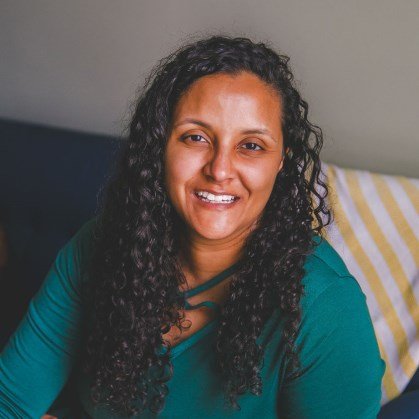
KC Doula Ashley Haden-Peaches
“I was able to triple the amount of families I could serve in one year compared to previous years,” Carr said.
Other doulas, including Ashley Haden-Peaches, used their grant to advance their education.
“I was able to invest in myself by taking additional training and adding a new certification to my competencies,” Haden-Peaches said. “I have been able to focus more on my patient relationships.”
Missouri Medicaid began covering doula services in October 2024, and the Kansas City Health Department developed the KC Doula Program that November. Community Capital Fund (CCF) joined as intermediary administrator in January 2025.
CCF's needs assessment survey drew 33 area doulas, and every participant named access to capital as a top need.
“Making doula care more accessible means providing support to both families and doulas,” said Hilary Lindstrom, a Registered Nurse and the Nurse Administrator for the Kansas City Health Department. “Part of making care easier to access is making sure doulas have the resources they need to keep serving families. Doulas bring so much heart to their work, but running a small business comes with real costs, and funding sources can be hard to come by. Through this pilot, the Health Department helped doulas cover some of their essential business expenses so they could keep doing the work they care about.”
The program unfolded in two phases. Business improvement grants were awarded to 12 doulas, who completed a total of 37 trainings and certifications, and 90 percent upgraded their websites or marketing.
Scholarship services followed, covering care for families through 22 doulas. And in July, Missouri signed a law to further expand Medicaid-covered doula visits.
Lindstrom added that she was excited to see how doulas were creative in leveraging their support from the program, including one who made her postpartum support circle free so more families could join. Seeing the pilot program’s successes motivates her to advance this work for years to come, Lindstrom said.
“All mothers should have access to trusted care providers who are in their corner during one of the most transformative times in their lives,” she said. “As we look to the future, I want us to keep building a community where families know who they can turn to and can get connected to support without having to figure everything out on their own. I also hope we continue to recognize what doulas need as small business owners so they can keep providing these important services to families.”
On Oct. 29, Altruism, Inc. honored the program at its First Birth Equity Leadership Awards. Dr. Marvia Jones and Aviance Webb, LSSGB, accepted the award on the program’s behalf.
Kansas City-area doula Amy Weaver said she’s grateful to be able to help more people in our communities.
“It has been such a blessing to be able to provide birth and postpartum support to families who otherwise wouldn’t have been able to afford these services,” she said.